Principles OverTechnique
The Krav Maga system is built on principles — not choreography. The technique is where understanding begins. It is never where it ends.
Krav Maga has specific techniques — but students should never mistake the technique for the absolute truth. The technique is the beginning of your understanding of self-defense, not the end.
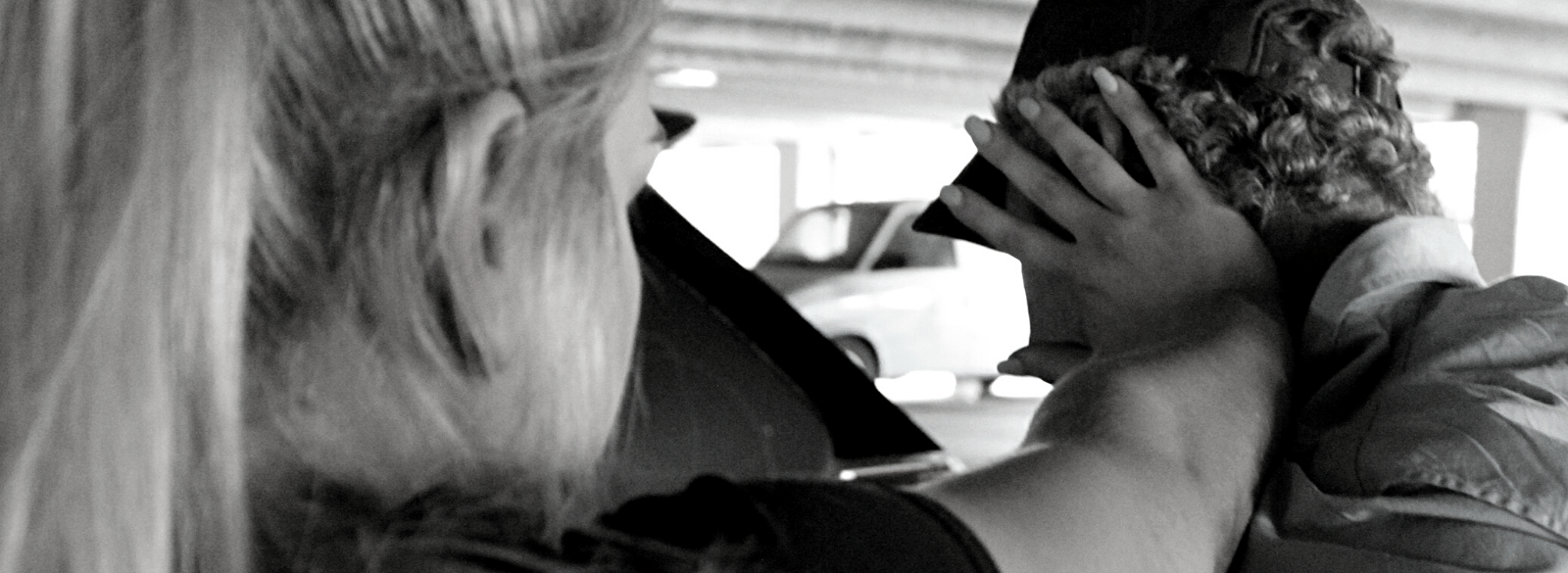
For example: a defense against a bearhug. The defender creates leverage on the attacker’s neck by reaching around with her far-side hand, catching his face and nose, and peeling or rolling his chin off her chest. This is an excellent technique — but it is only an example of the principle. You can perform a similar technique using the near-side hand, digging and pushing against the attacker’s nose and eyes.
Is one technique better than the other? No. In one situation the first may be better. In a second situation the second may give better results. The point is that you must not mistake the technique for the principle. The technique is to reach around with your arm. The principle is to create leverage on the neck.
The technique is the beginning of your understanding of self-defense, not the end.
As instructors, we know we must start with actual technique. If we give students abstract principles on day one, they’ll have nowhere to begin. That would be like plucking the strings on a guitar, describing music theory, and then handing the instrument to a new student and asking him to figure out a song for himself. He’d feel lost.
Instead, we teach him the notes. We help him build simple songs and chords. And soon he understands that the variations of those notes and chords are nearly limitless. So it is with defensive tactics: we start with basic structure so that information can be delivered effectively. By the end of training, the student will grasp the theory and make his own music.
Our approach has always been to find one general movement that deals with as many variations in the attack as possible. It’s absolutely impossible to create one unique defense against every possible type of attack. Life doesn’t work that way. If we teach you 300 defenses against 300 attacks, you’ll go outside and be confronted with attack number 301.
Instead, we create one movement that addresses as many variations as possible using core principles. This yields a simpler, more refined system that is easier to recall under stress. The simpler the system, the more decisive your actions will be — because you won’t be confused by options.
Hick’s Law
The more choices a person has in response to a stimulus, the longer their overall response time. Extended response time in self-defense is dangerous. We reduce it two ways: train more, and simplify the system.
Stress Reduces Performance
Increased training reduces the impact of stress, but rarely brings it to zero. Since you’ll only need self-defense techniques when you’re under stress, an effective system simplifies both the physical movements and the decision-making.
Krav Maga is designed for people who cannot train all day, every day. But even if you do have time to train extensively, you still benefit from a refined, efficient system. The system is built to reduce your options so that you do not hesitate under stress. When presented with a life-threatening situation, you react decisively and aggressively — determined to neutralize the threat so you and your loved ones are safe.
Imagine a long piece of wood — a 2×4 — laid on the ground. Could you walk across it without touching the ground? Of course. Now imagine the same plank laid across the gap between two tall buildings. Could you walk across it then? The plank is the same. Gravity is the same. Your ability is the same. What changed? Stress. Your heart rate goes up, adrenaline floods your body, your muscles tighten. These physical and mental responses combine to impair your performance. Training reduces the impact — but rarely to zero. That’s why the system must be simple enough to work when stress is at its highest.
Books and videos deliver significant information about techniques and principles, but they cannot simulate real training. Real training involves creative stress drills and applying techniques under various types of pressure. No technique or response is truly learned until it’s tested in dynamic situations.
We strongly recommend performing stress drills under a trained instructor. ETKM instructors go through an intense certification program that includes physiology, sports kinesiology, safety protocols, and drill design — so the drills they offer are both productive and safe.
Simple Stress Drill
Close your eyes. Stand passively. Wait for your partner to attack with one of two known chokes. When you feel it, open your eyes, identify the attack, and react immediately. Simple — and extremely effective.
Advanced Stress Drill
Three pad holders push and hit the defender. One attacker waits. The defender covers but cannot strike back. At any moment, the attacker grabs with a random attack. The defender must react instantly. The pad holders resume. Exhausting — and real.
Variation: Strike + Takedown
Defender strikes one pad continuously. A second pad holder interrupts with hits — defender pivots and continues. At any point, the attacker closes in from behind and takes the defender to the ground. Defend from mount. Get up. Repeat.
The Standard
We have hundreds of drills like these. They allow students to learn how to apply techniques under realistic pressure. It is the only way to truly prepare for a violent encounter.
Experience It on the Mat
Principles make sense when you read them. They make a difference when you train them. Your first step is a free trial lesson.